Choosing between above-ground and below-ground backflow installation in Virginia depends on the assembly type, code requirements, and the property’s hazard level. While both options have pros and cons, Virginia law mandates above-ground placement for high-hazard assemblies like Reduced Pressure Zone (RPZ) devices. Here’s what Virginia property owners need to know.
Above-Ground Backflow Installation
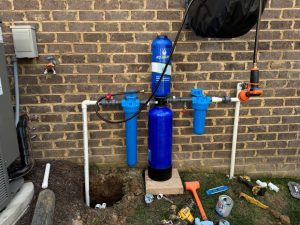
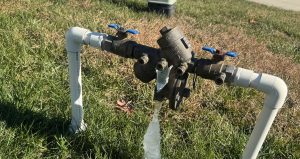
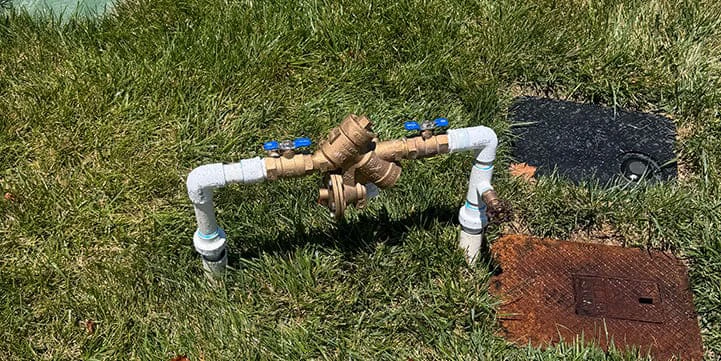
An above-ground backflow assembly is installed in an insulated, heated enclosure and is required for high-hazard systems such as RPZs, which discharge water when they fail.
Pros:
- Easier maintenance and testing: Above-ground assemblies are more accessible, making routine inspections and repairs quicker and safer for technicians.
- Eliminates flood risk: Failures won’t cause indoor or basement flooding since water discharges above ground.
- Prevents contamination: Avoids the risk of contaminated floodwater entering the system, a common issue with submerged vaults.
- Freezing protection: Heated enclosures shield the device from Virginia’s freezing temperatures.
- OSHA compliance: Above-ground units don’t fall under confined space regulations, simplifying technician access and reducing safety risks.
Cons:
- Visual impact: These enclosures can be visually unappealing, though smart landscaping can help conceal them without blocking access.
- Tampering risk: While enclosures are lockable, they may be more prone to vandalism than hidden underground systems.
Below-Ground Backflow Installation
These are installed in underground vaults with a cover at grade level and are typically limited to low-hazard applications using Double Check Valve Assemblies (DCVAs).
Pros:
- Aesthetic appeal: Hidden from view, preserving landscape design.
- Added security: Less visible and therefore less likely to be vandalized.
- Natural insulation: The earth provides moderate protection from cold, though additional insulation is still necessary in Virginia.
Cons:
- Not allowed for high-hazard devices: RPZs cannot be legally installed below ground in Virginia.
- Flood risk: Vaults can fill with water, increasing the risk of device failure or contamination.
- Contamination hazard: Standing water in a vault can expose the system to health risks.
- Higher maintenance costs: Servicing underground units involves confined space protocols and increased labor.
- OSHA regulations: Underground vaults are considered confined spaces and may require special safety procedures.
Which Is Best for Your Property?
In Virginia, the installation type often depends on your system’s hazard level:
- Residential irrigation: Pressure Vacuum Breakers (PVBs) are commonly used and must be installed above ground and at least 12 inches above the highest sprinkler head.
- High-hazard systems: Commercial irrigation, fire suppression, or medical applications require RPZ assemblies, which must be above-ground.
- Low-hazard applications: Some commercial setups may allow DCVAs underground, but maintenance challenges and risk of contamination often make above-ground the better choice.
Need Help with Backflow Installation in Virginia?
At T&C Outdoors, we specialize in compliant, code-approved backflow installations for residential and commercial properties across Virginia. Whether you need an RPZ, PVB, or DCVA, our certified technicians ensure safe, efficient, and regulation-ready installs.
Contact us today for a consultation or to schedule your installation.